An electric heater is the simpler choice for an indoor sauna you use often. A wood-burning stove suits cabins and cottages without a large electrical supply, but needs a chimney, permits and more upkeep. Here is how the two compare in practice.
The short answer
Pick electric for an indoor sauna you want to use often with little effort. Pick wood for a cabin, cottage or backyard sauna without a big electrical supply, or when lighting the fire is part of the ritual. The table below shows the differences that usually decide it.
Electric heater
Wood-burning stove
Power or fuel
Dedicated 208/240 V circuit sized to the heater output
Firewood, no electricity needed
Heat-up
Typically 30 to 60 minutes, can start from a timer or phone app
Depends on the stove and the fire; you have to light and feed it
Venting
Room ventilation only
Certified chimney with set clearances
Install
Licensed electrician and electrical permit
Chimney work, often a building permit, insurer approval
Upkeep
Re-stack or replace stones, occasional element or contactor
Ash removal, chimney sweeping, firewood storage
Best place
Basement, bathroom, indoor room, backyard sauna with power
Cottage, cabin, lakeside or off-grid sauna
Steam and feel
People often say a wood sauna feels softer. Much of that comes from stone mass and room design rather than the fuel. A wood stove usually carries a lot of rock and runs a long session, so the stones stay very hot and turn water into steam gently. An electric heater with a large stone load, such as a tower heater, can come close. Electric heaters with very few stones heat up fast but give a sharper, shorter burst of steam.
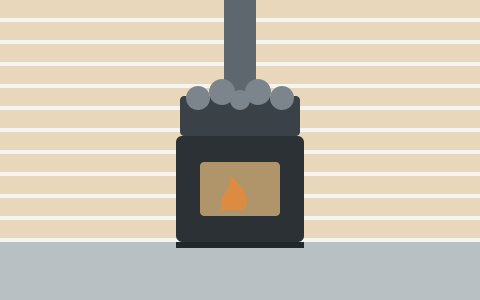
A wood stove needs a chimney and clearances, but no electrical supply.
Electricity and installation in Canada
An electric sauna heater runs on a dedicated 208 V or 240 V circuit. A 6 kW heater draws about 25 A at 240 V, and a 9 kW heater about 37.5 A, so many homes need a new breaker and sometimes a panel upgrade. The heater must carry a Canadian certification mark, such as CSA, cUL or cETL, to pass inspection. The full checklist is in our guide to wiring a 240 V sauna heater in Canada.
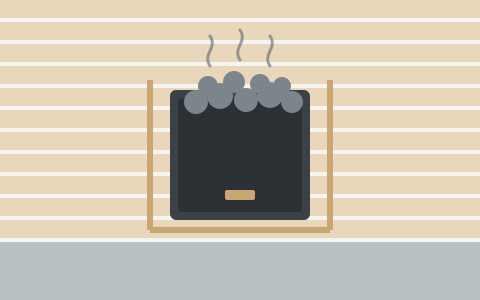
An electric heater only needs a dedicated circuit and room ventilation.
Chimneys, permits and insurance for wood
A wood stove is a solid-fuel appliance. Expect to:
Use a chimney system rated for the stove and keep the clearances in the manual to walls, ceiling and benches.
Put the stove on a non-combustible base that can carry its weight, which can reach several hundred pounds with stones.
Check municipal rules. Many places require a permit or inspection, and some limit wood-burning appliances.
Tell your insurer. Many ask about wood stoves and may want the installation inspected.
Neither is better in every case. Wood suits off-grid cabins and people who enjoy tending a fire; electric suits indoor home saunas and quick, regular use. The steam itself can be just as good from either if the heater holds enough stones.
How long does an electric sauna take to heat up?
A correctly sized electric heater in an insulated room typically reaches bathing temperature in about 30 to 60 minutes. Heavier stone masses and colder rooms take longer.
Do I need a permit for a wood-burning sauna stove?
Often, yes. Many Canadian municipalities require a building permit or inspection for a solid-fuel appliance and chimney, and insurers commonly ask about wood stoves. Check with your municipality before you build.
Can I put a wood stove in an indoor sauna?
Only with a properly installed chimney, the manufacturer's clearances and approval under local codes. That is why most indoor home saunas use electric heaters.
Last checked November 8, 2026. Facts come from the brands' own sites and documents. How we check